Experimental design is an umbrella term for a big concept! Science pedagogy used to have us box it up with a pretty bow and call it ‘the scientific method’. And in order to practice good science, there is absolutely a value to understanding the objective of each discreet step that makes up the scientific method. But, let’s be real… if we want our students to understand the incredible depth and breadth that is the scientific field, then we must teach them to bust out of the box and think bigger!
Now the three-dimensional framework of the Next Generation Science Standards ask us science teachers to get our students thinking like scientists. Take a look at the science practices:
- ask questions and define problems
- develop and use models
- plan and carry out investigations
- analyze and interpret data
- use mathematical and computational thinking
- construct explanations and design solutions
- engage in argument from evidence
- obtain, evaluate, and communicate information
When I first tried to wrap my head around this, I felt a gigantic overwhelm! Do I cover these practices all at once? Do I spread them out through the year’s lessons? How can I require that my students measure precisely and use evidence to make arguments during every lab of the school year if I don’t teach these skills deliberately?
So Long Cookbook Labs
So this may seem like a funny analogy, but it helps me to think about all of this… I am totally a recipe cook. I have an extensive recipe collection. It gives me peace of mind knowing that all of my recipes are in one place, organized by course, ready to be whipped out for any social occasion. I do this because I have to follow recipes or I feel like I can’t cook! On the other hand, my husband is an improvisational cook. He will almost never look at a recipe. Instead, he will check out what ingredients we already have on hand and he’ll get to chopping, grating, sauteing, and deglazing. Usually, he’ll come up with something tasty that we’ll enjoy. But it’ll be a one-and-done. He wouldn’t be able to recall how much of this or that he used, let alone the order that he prepared everything. I’ll certainly never be able to recreate that meal and neither will he.
Okay, so where am I going with this? Good science requires experimental design that is somewhere in between these two extremes. It’s not a perfect recipe that gets followed the same every time. For the most part, ‘cookbook labs’ that read like a recipe and don’t allow for authentic engagement with the science practices are not going to help our students understand what science really is let alone feel excited about it! The questions that science seeks to answer are not always clear and straightforward. It requires the right tools and the discipline of precision when it comes to using them, and it requires diligence in writing down the procedure for the next cook. But it also requires a big, unpacked scoop of higher-level thinking skills, a few pinches of ideas taken from other ‘cooks’, and a heap each of flexibility and openmindedness. So long cookbook labs!
That said, if we want our students to practice good science, we need to provide them with a great foundation of refined skills in understanding variables, measuring with various tools, and precision and accuracy in data collection. Then, we need to give them authentic opportunities to put those skills to practice. This is when they’ll step into the side of science that requires a smorgasbord of improvisation and creativity.
Let Them Own Their Learning
Does ‘Dollar Store’ hand soap clean hands as well as ‘Bath and Body Works’ hand soap or an ‘eco’ brand made with all-natural ingredients? Is Revlon’s makeup remover a better buy than Cover Girl’s? Will Huggies hold up while Luvs diapers leak?
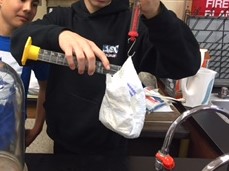
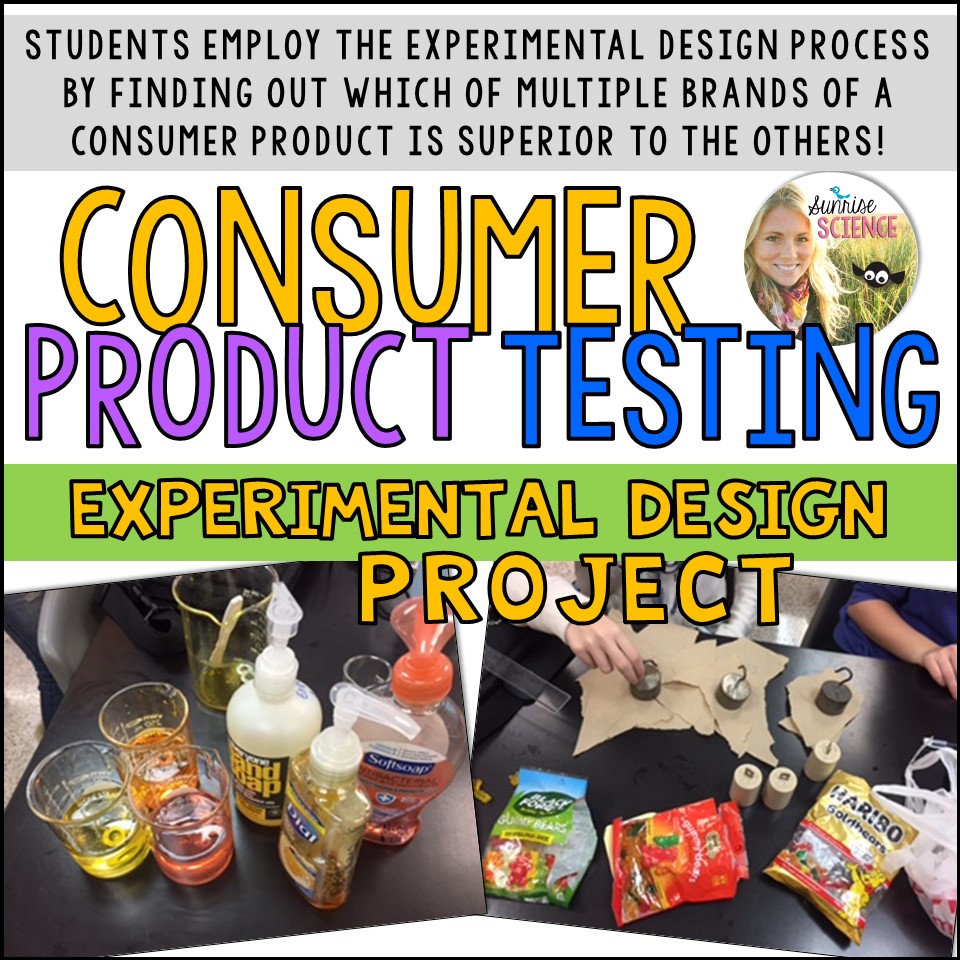
This student-centered Consumer Product Testing project helps students to actually BE scientists with an approachable and fun challenge! Students choose a type of consumer product for which they will determine the most superior brand out of 3 to 4 brands of that product (for example: Bounty, Scott, Brawny, and store-brand paper towels). To determine superiority, students will design three experiments that each test a different parameter of the products.
Boost excitement and engagement by letting students choose what type of consumer product and brands they would like to test. Middle schoolers love being given choices and let me tell you– when you let them choose what products they want to test for this project, they’ll eat it up and they will probably shock you with their great ideas! I have had students test everything from gummy bears (for density, size change in water overnight, solubility in hot water), to facial wet wipes (for strength, effectiveness on a streak of lipstick, weight before and after drying out), to disposable diapers (for volume of water-holding capacity, strength of Velcro, mass of polymer inside), etc.
Other product ideas:
- chewing gum
- lipsticks
- sunscreens
- toilet papers
- seltzer waters
- diaper brands
- types of orange juice
- hand soaps
- makeup removers
- fertilizers
- kids’ bubble solutions
- gummy bears
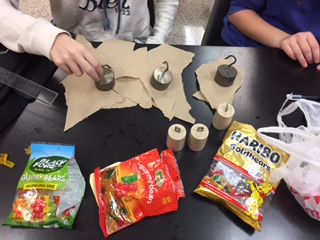

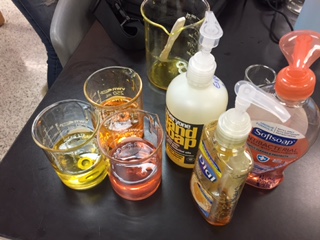
Students’ experimental tests should produce quantitative data and they should be tests that can be performed in your classroom with equipment that is available. I make the typical equipment visibly available (balances, spring scales, graduated cylinders, small weights, rulers, stopwatches, beakers, etc.) and they either know how to use this equipment or they figure it out/ask me (it’s great inquiry!). I make myself readily available as a brainstorm partner if someone is trying to figure out how to set up a fair test of something.
The Roadblocks Lead to Retention
The learning will be palpable in your classroom as your students collaborate ideas, determine their variables, learn how to use new tools, and strive to run fair tests. Inevitably, student groups will think of new ideas as they dive into the properties of the products that they are testing. They may find that they need to re-evaluate their experimental designs, and they will get ideas from other groups.
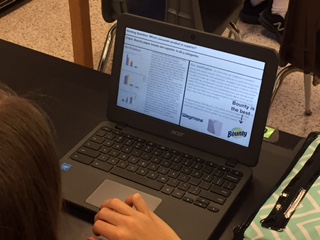
They will evaluate their peers’ experiments and provide feedback (hello, Bloom’s Taxonomy!). Ultimately, your students will need to communicate their results using a Claim, Evidence, Reasoning framework. Their claim will state which brand of their product they have determined to be superior. Their evidence will be the data collected from their tests. Their reasoning will explain how their evidence supports their claim.
When During the School Year Should You Do This Project?
Try this project anytime during your school year! In the beginning of the year, it’ll get your kiddos excited to be doing real science and it will provide a great foundation for what experimental design means. It can serve as a fun and fresh week-long break (that hits the science practice standards!) if you need one in the middle of the school year or between units. It can also be used as an end of the year project to assess the skills that your students have acquired through the year!
I hope you try out this project with your students. If so, please leave a note about your experience in the comments below. I’d also love to hear about the creative products that your students choose to use!
I have prepared full teacher notes and a student packet for this project. You can find it by clicking on the button below!